Understanding GPR Surveys
Ground Penetrating Radar (GPR) surveys have become vital tools for various industries seeking to understand the subsurface composition of their sites. Particularly in a bustling metropolis like London, where urban density complicates traditional surveying methods, GPR provides an effective, non-invasive solution. By employing radar pulses to capture high-resolution images of underground utilities and structures, GPR offers valuable insights that can facilitate construction, ensure safety, and streamline urban planning. For those considering a GPR survey, exploring reliable options for GPR Survey London can yield significant benefits.
What is a GPR Survey?
A GPR survey is a geophysical method that uses radar technology to detect and map subsurface features. The system emits electromagnetic waves into the ground, and these waves reflect back upon encountering different materials, creating a profile of what lies beneath. This technique is particularly advantageous for identifying buried utilities, archaeological artifacts, and geological structures without the need for excavation.
The Science and Technology Behind GPR
GPR technology operates on the principles of radar and electromagnetic signal propagation. It consists of a transmitter and a receiver. As the transmitter sends out pulses, these signals penetrate the soil, and when they hit a boundary between different materials, some of the energy is reflected back to the receiver. The data collected is then processed to generate visual representations of subsurface features, allowing surveyors to interpret the information accurately.
Benefits of GPR Surveys in Urban Areas
In urban environments, GPR surveys provide several distinct advantages:
- Non-Invasive: GPR surveys do not require digging or drilling, which helps mitigate disruptions in busy city settings.
- Cost-Effective: By preventing damage to existing utilities during renovation or construction, GPR surveys save time and reduce financial risks.
- Fast Data Collection: GPR can quickly gather extensive data over large areas, facilitating timely decision-making.
- High Resolution: The technology provides detailed imaging, allowing for better analysis and planning.
Applications of GPR Surveys in London
The applications of GPR surveys in London are as diverse as the city itself. From infrastructure projects to historical investigations, GPR serves a critical role across various sectors.
Construction and Infrastructure Development
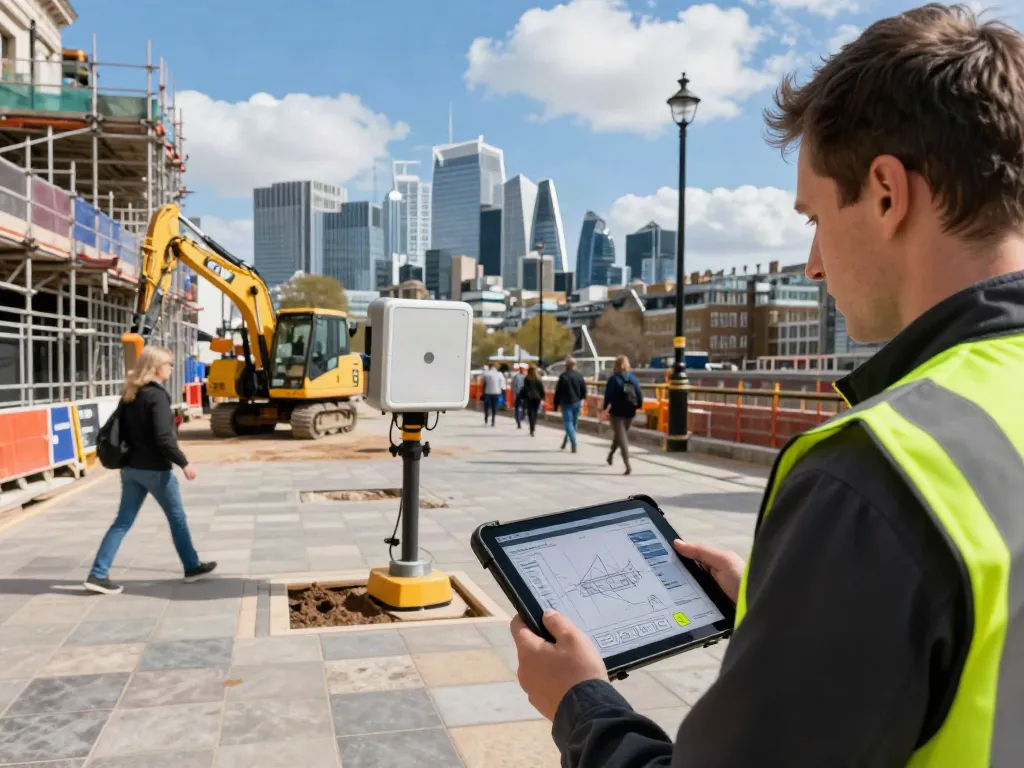
In the construction industry, GPR is employed to identify existing utilities and other underground structures before the start of any excavation. This information is vital for ensuring safety and compliance with regulations. For instance, before laying new foundations or installing drainage systems, contractors can use GPR to map out the location of existing water pipes, electrical conduits, and other critical infrastructure.
Archaeological Investigations
Archaeologists benefit immensely from GPR, as it allows them to explore potential excavation sites without disturbing the ground. The technique can reveal the presence of foundations, graves, and other archaeological remains, aiding in site excavation planning while preserving the context of the findings. In a historical city like London, where many sites are rich in heritage, GPR is invaluable.
Environmental Assessments and Remediation
GPR surveys are also instrumental in environmental assessments, particularly in evaluating land for contamination. By visualising the subsurface geology, environmental professionals can identify areas where pollutants may exist and develop strategies for remediation. This application is critical for ensuring safe land use and environmental protection.
Preparing for a GPR Survey
Proper preparation is key to the success of any GPR survey. Understanding the site conditions, legal requirements, and potential costs can significantly enhance the effectiveness of the survey.
Site Selection and Preparation
Before conducting a GPR survey, careful site selection is essential. Factors such as the type of soil, the presence of building structures, and the expected depth of utilities will influence data collection. Additionally, the site should be cleared of obstructions to ensure accurate measurements.
Understanding Legal Considerations and Permissions
In London, certain regulations govern the use of GPR technology, especially in densely populated areas. It is crucial to obtain the necessary permissions from local authorities before proceeding with a survey. This may involve notifying utility companies and securing access to public or private land.
Cost Considerations for GPR Surveys in London
The cost of GPR surveys can vary widely depending on factors such as the size of the site, the complexity of the survey, and the specific requirements of the project. Generally, it is advisable to obtain quotes from multiple providers to compare services and pricing effectively. By understanding the cost implications, clients can budget more accurately and avoid unexpected expenses.
Challenges and Limitations of GPR Surveys
While GPR is a powerful tool, it does come with its own set of challenges and limitations that users should be aware of.
Common Misconceptions Around GPR Technology
One of the most prevalent misconceptions is that GPR can provide a complete picture of what lies beneath the surface. While it offers detailed imaging, interpreting GPR data requires expertise, and results can vary based on soil conditions and the materials present.
Interpreting GPR Data: What to Expect
Interpreting GPR data is not straightforward; it often requires trained professionals to analyse the results accurately. The data collected can show anomalies that may or may not represent utilities or structures. Therefore, an experienced surveyor is essential for making informed decisions based on the findings.
Environmental Factors Affecting GPR Measurements
Environmental conditions can significantly affect GPR performance. Factors such as soil moisture, temperature, and the presence of organic materials can alter the signal's propagation and result in less accurate readings. Understanding these influences is crucial for planning a successful survey.
The Future of GPR Surveys in London
The future of GPR technology is promising, particularly as urban areas continue to evolve and expand. Innovations in the field of GPR are paving the way for enhanced efficiency and effectiveness.
Emerging Technologies and Innovations in GPR
Advancements in GPR equipment and data processing software are continually improving the clarity and usability of survey results. The integration of artificial intelligence into GPR analysis is expected to automate interpretations and enhance decision-making processes.
Future Trends in Urban Utility Management
As cities grow, the management of utilities will become increasingly complex. GPR surveys will play a vital role in mapping these utilities, allowing for better planning and maintenance. Moreover, the adoption of smart city technologies will facilitate real-time monitoring of utilities, potentially integrating GPR data with other systems.
Case Studies on GPR Implementation in 2026
Looking ahead, case studies from 2026 indicate a significant trend towards the widespread adoption of GPR across various sectors. These implementations will highlight best practices, showcase technological advancements, and illustrate how GPR can adapt to the unique challenges posed by urban environments like London.
How much does a GPR survey cost?
The cost of a GPR survey can vary depending on multiple factors, including site size, survey complexity, and the provider's expertise. Generally, clients should expect to invest anywhere from a few hundred to several thousand pounds for comprehensive surveys.
What are the best survey companies in London?
Several reputable surveying companies in London specialize in GPR services. When selecting a provider, it’s essential to consider their experience, customer reviews, and range of services offered to find the best fit for your project.
How deep can a GPR survey go?
GPR surveys can typically penetrate depths of 0.5 to 30 meters, depending on soil conditions and the frequency of the radar used. Higher frequency GPR systems provide better resolution but have limited depth capabilities, whereas lower frequency systems can penetrate deeper but with less detail.
What industries benefit from GPR surveys?
Numerous industries benefit from GPR surveys, including construction, archaeology, environmental science, and infrastructure management. Each of these fields leverages GPR’s capabilities to enhance project efficiency and ensure safety.
How to interpret GPR survey data?
Interpreting GPR survey data requires a solid understanding of both the technology and the site's specifics. Engaging qualified professionals to analyse the data can provide accurate insights and inform project decisions effectively.